Race day
Lighter geometry for race day
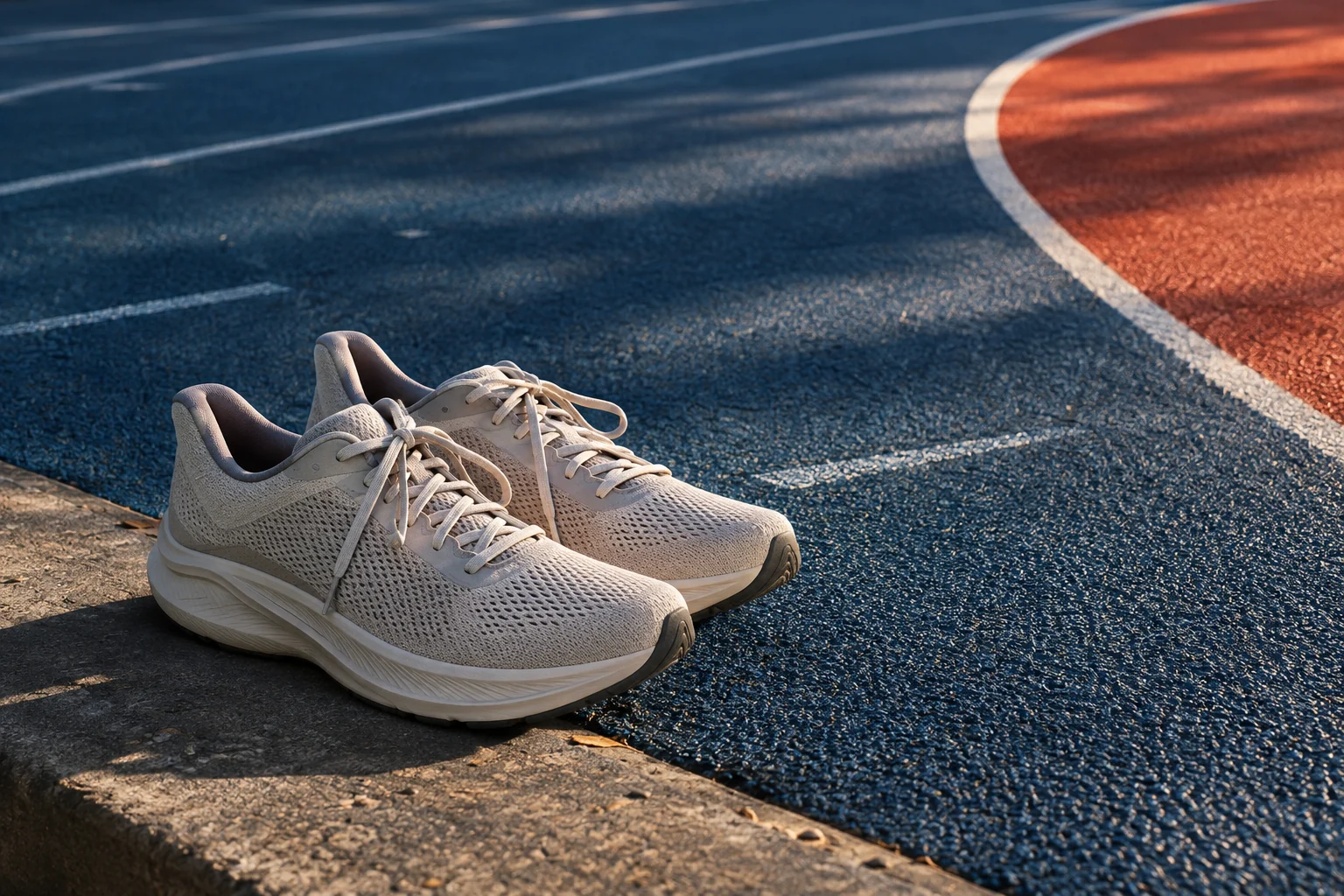
Race-oriented shoes trade cushioning for a quicker toe-off and a tighter hold through the upper — each shift feels different on asphalt versus tartan.
What often changes
- Weight — Less material can feel quicker at toe-off; it can also feel less forgiving late in a long effort.
- Stiffness — Plates and denser foam change how the foot rolls; some runners prefer more flex on tight turns.
- Upper hold — Race uppers may skip padding; lace tension matters more when overlays are minimal.
- Cushion depth — Thinner stacks can feel fast on smooth asphalt and harsh on broken pavement.
Track vs road start lines
A rounded tartan loop rewards grip on the curve; a road 5K may include corners on crowned asphalt. The same race shoe might feel different in each setting.
Keep a daily anchor
Most training still lives in a cushioned daily pair. Race shoes usually make more sense when the route and distance are familiar.