Daily running
Cushion and flex for repeat road miles
How foam and mesh feel over a week matters more than specs on a hang tag — cushion, flex, and upper comfort on the surfaces you repeat.
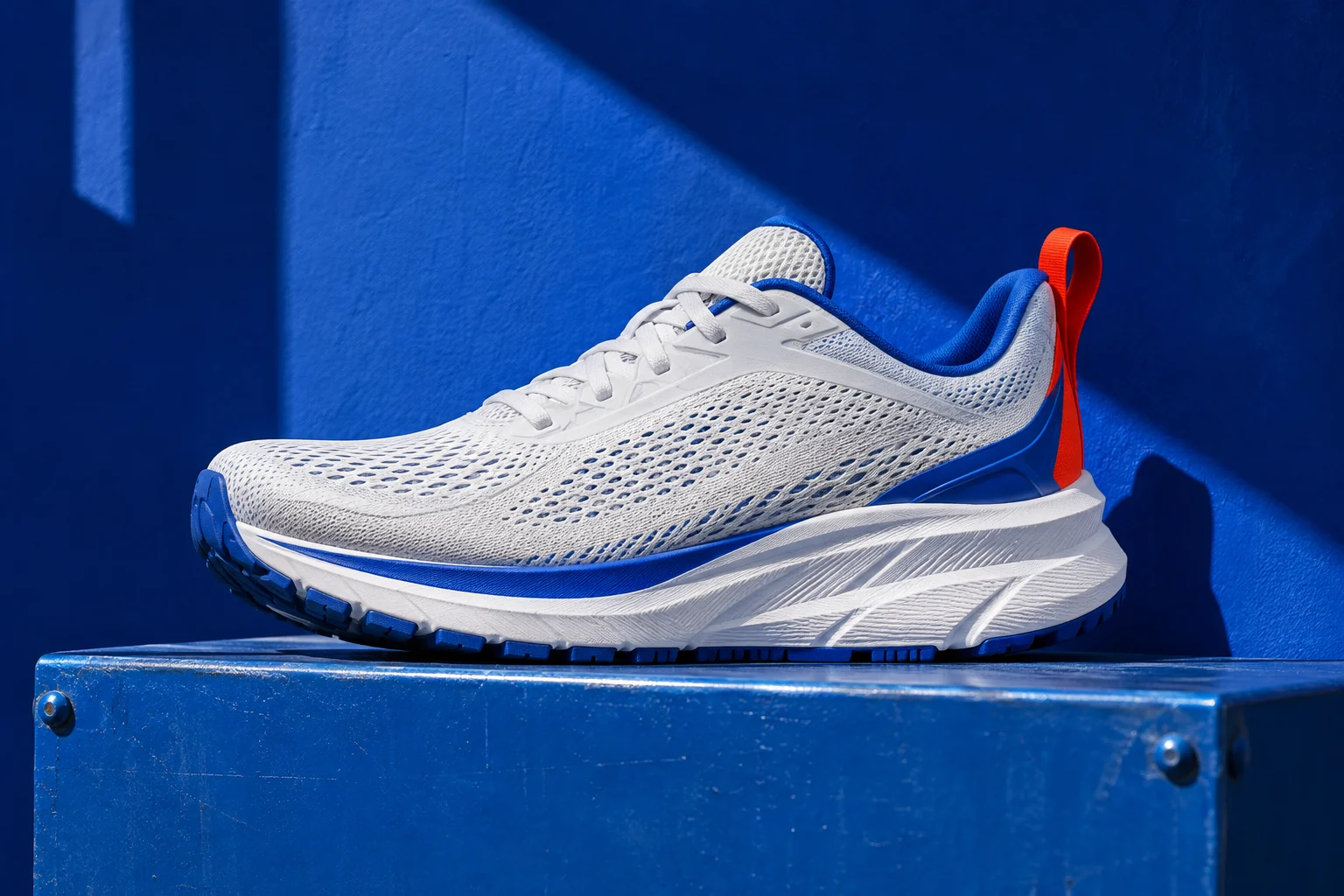
How a daily trainer reads
- Cushioning feel — Softer packs can feel smooth on concrete; firmer packs can feel quicker on short tempo sections.
- Flex point — Where the shoe bends should line up with your foot; a stiff toe can feel clumpy on sidewalks.
- Upper comfort — Toe box shape and overlay seams show up after forty minutes, not in a thirty-second stride.
- Weekly rhythm — Some runners rotate two daily pairs to let foam recover between outings.
Routine surfaces
Painted bike lanes, brick pavers, and park loop asphalt each add small vibrations. A balanced daily shoe usually handles that mix without feeling like a specialty spike.
When to think wider
If toes press the upper on long outings, forefoot volume and width options may matter more than extra foam. Compare width options on foot and notice how toe splay changes the feel.
Pairing with socks
Sock thickness changes perceived length inside the shoe. A thin race sock and a winter tab can feel like different sizes in the same pair.