Fit
Room, hold, and lace tension
Comfort starts with length and width, then how the upper closes — each foot lands on its own combination of room, hold, and lace pressure.
Core fit checks
- Toe room — A little space at the front helps on downhills; toenails should not press the cap on flat ground.
- Heel hold — The heel should sit without lifting when you walk; excess slip often shows up as hot spots.
- Midfoot wrap — The upper should hold without pinching the instep; lace windows help fine-tune pressure.
- Evening try-on — Feet can swell late in the day; sizing at that time can feel closer to a longer run.
Lacing patterns
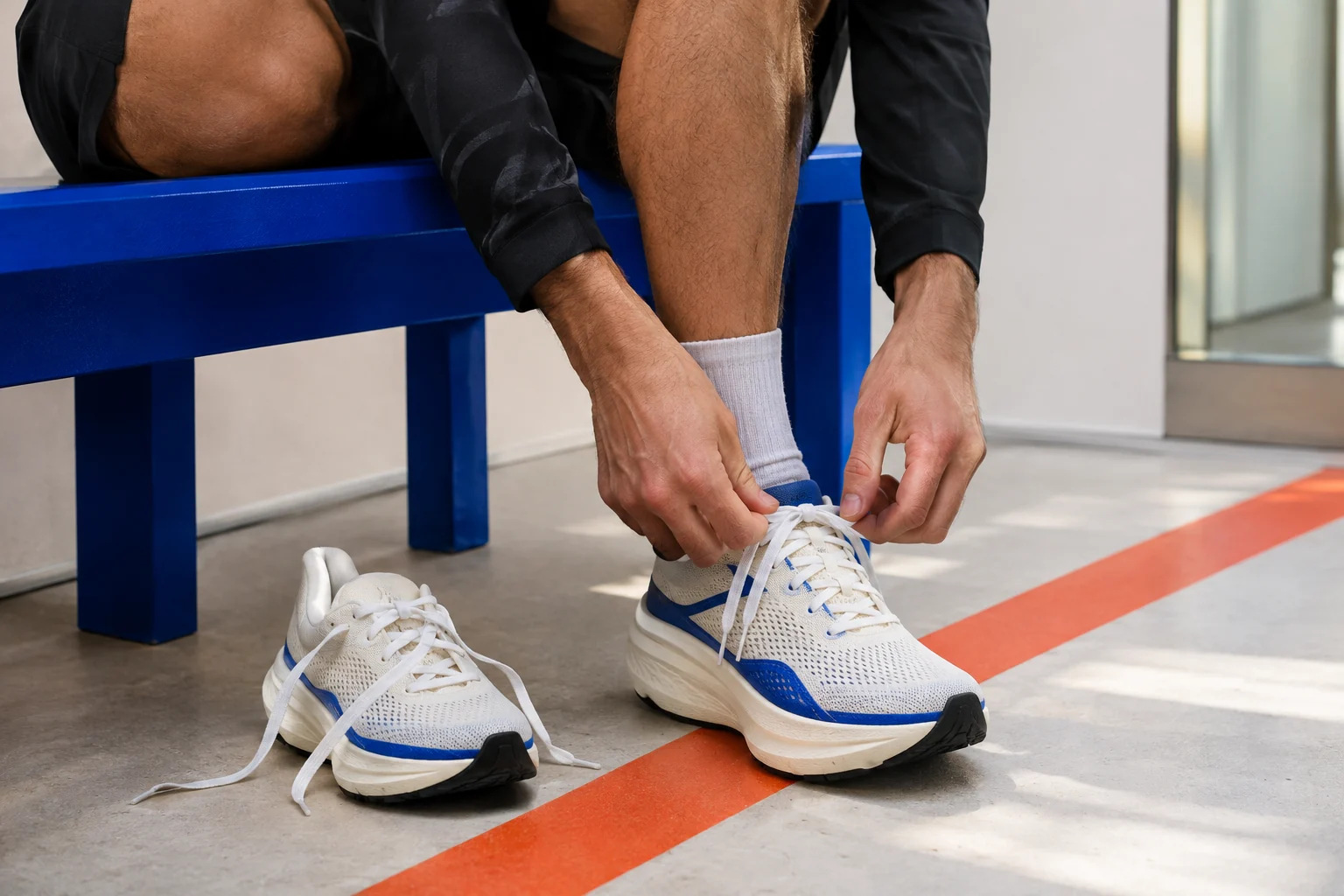
Runner's knots, window lacing, and skipping eyelets change pressure on the arch and toes. Adjust one variable per outing so you know what helped.
Heel lock
Window lace
Even tension
Ankle bend
Width ties in
Forefoot shape and toe splay change how length feels. A narrow upper on a wide forefoot can mimic a shoe that is too short.
Socks change the fit
Cushioned tabs and double layers take up volume. Try the sock you actually train in when judging length.